In This Article
An unsecured business loan is financing that does not require collateral. Instead of pledging property or equipment, you are approved on your business's financial health: credit score, revenue, time in business, and cash flow. Amounts typically run $5,000 to $500,000 with terms of 3 months to 5 years. Most lenders still require a personal guarantee.
Quick answer: An unsecured business loan needs no collateral. Approval is based on credit, revenue, time in business, and cash flow. Typical range is $5,000 to $500,000. Online lenders can fund in 24 to 48 hours. A personal guarantee is usually required, meaning you are personally liable if the business cannot repay.
This guide explains how unsecured business loans work, who qualifies, what to watch for, and how to find your best option.
What is an unsecured business loan?
An unsecured business loan does not require collateral. Rather than pledging a physical asset such as real estate or equipment, the lender evaluates your business's financial health: credit score, revenue, time in business, and cash flow.
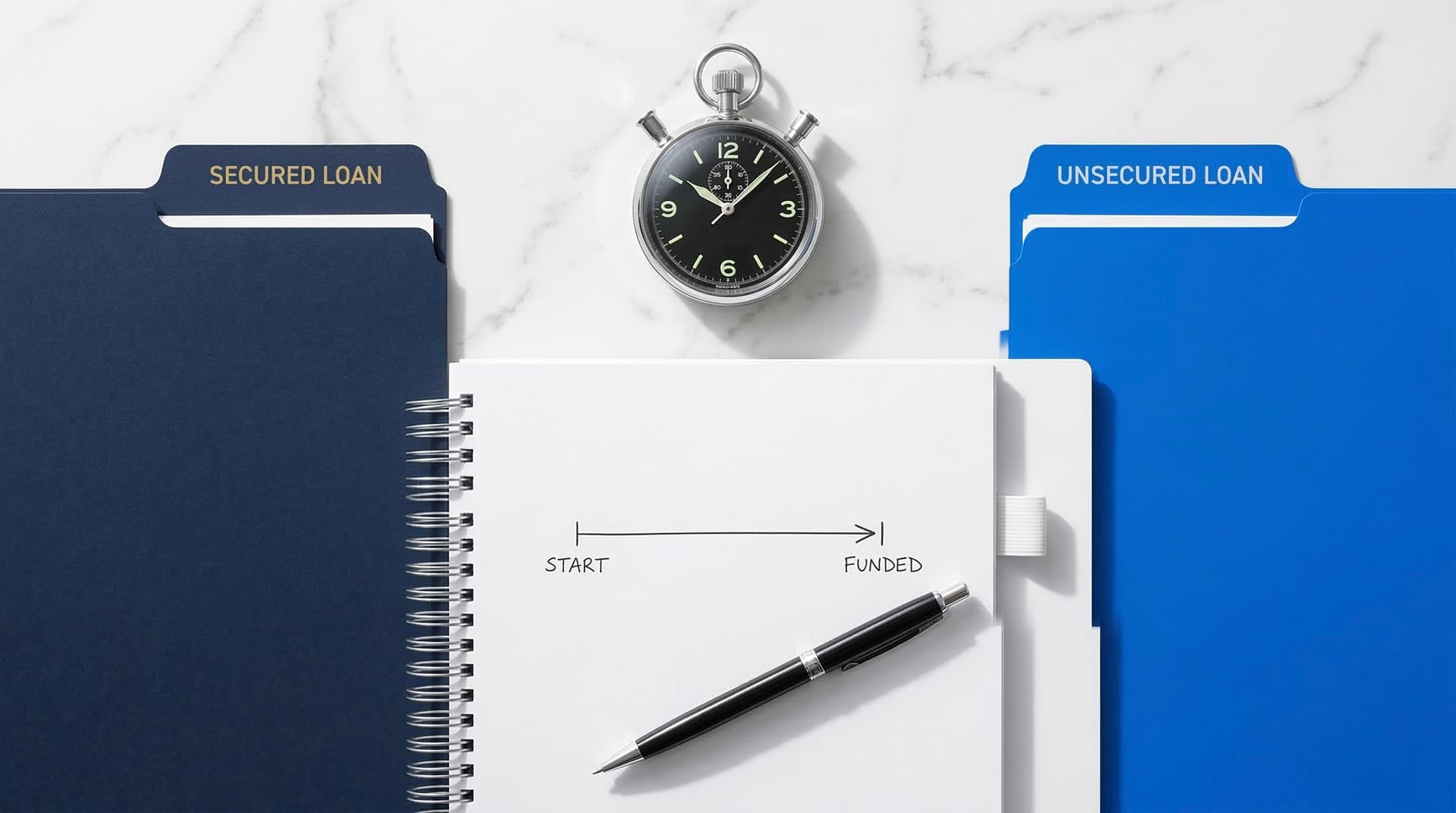
This differs from a secured loan, where the lender can seize pledged assets if you default. With an unsecured loan there is no specific asset attached to the debt, though most lenders still require a personal guarantee, which makes you personally liable if the business cannot repay.
Unsecured business loans typically range from $5,000 to $500,000, with repayment terms from 3 months to 5 years depending on the lender and your profile.
How does an unsecured business loan work?
- You apply online or in person and provide basic information: revenue, time in operation, and loan purpose.
- The lender reviews your financials, mainly credit score, bank statements, and sometimes tax returns. No asset appraisal is needed.
- You receive an offer with the amount, interest rate, term, and fees.
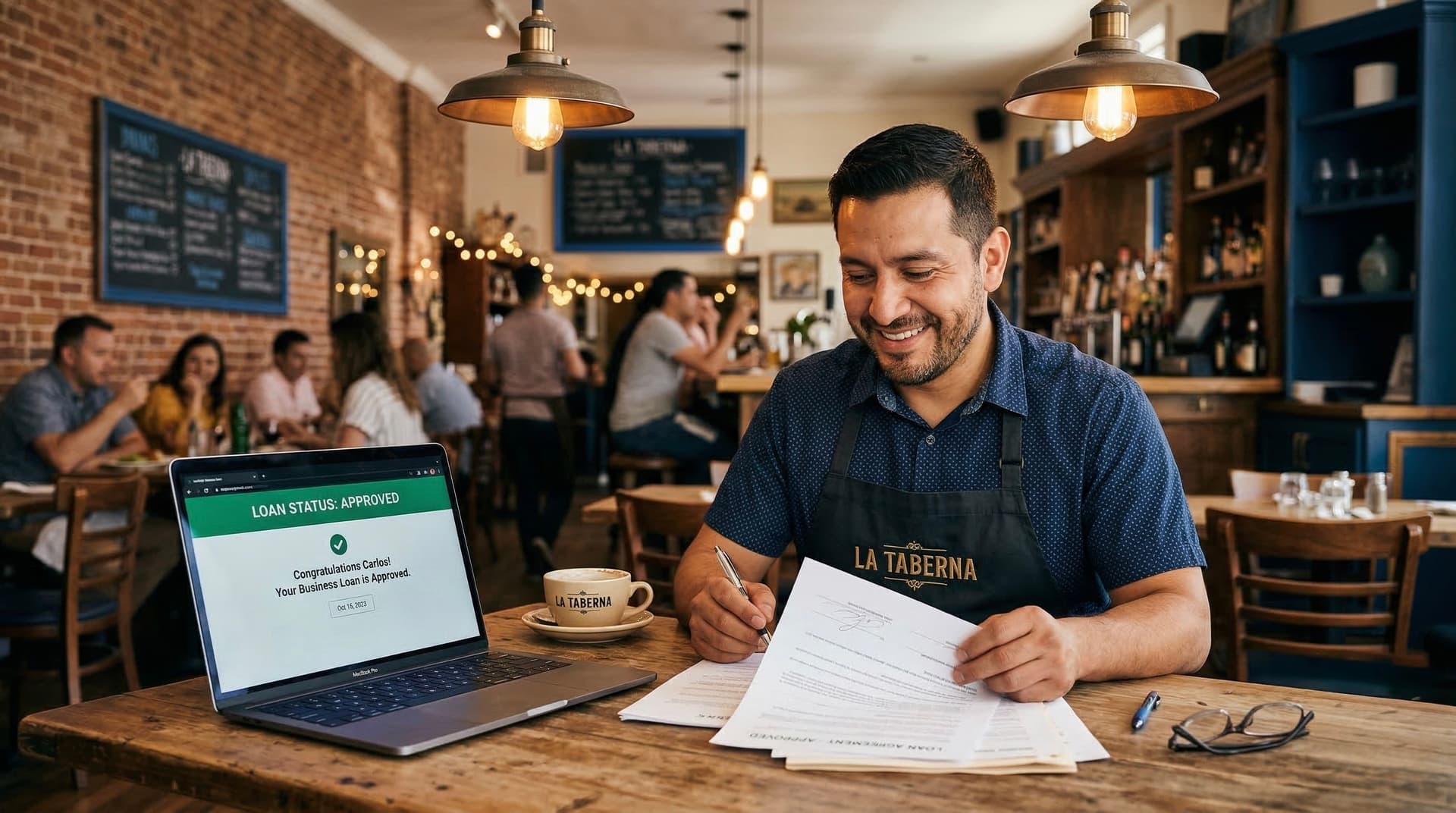
- Funds are deposited into your business bank account, sometimes within 24 to 48 hours with online lenders.
- You repay in fixed installments, weekly or monthly, until the balance is cleared.
With no collateral to appraise, the process is significantly faster than secured lending.
Unsecured vs secured business loans
| Unsecured | Secured | |
|---|---|---|
| Collateral required | No | Yes |
| Approval speed | 1 to 3 days | 1 to 4 weeks |
| Typical APR | 8% to 75%+ | 4% to 30% |
| Loan amounts | $5K to $500K | $25K to $5M+ |
| Best for | Fast capital, smaller needs | Large capital, lower rates |
If you own significant assets and have time, a secured loan can offer better rates. If speed matters or you do not want to risk assets, an unsecured loan is often the smarter move.
Who qualifies for an unsecured business loan?
Requirements vary by lender, but most look at:
Credit score. Banks typically require 680+. Online lenders may work with 550 to 600, though lower scores mean higher rates.
Time in business. Most lenders want 6 to 12 months minimum. Banks and SBA lenders often require 2+ years.
Annual revenue. Many lenders require $50,000 to $150,000 minimum, though this varies widely.
Cash flow. Lenders want to see enough income to cover repayments comfortably.
You do not need perfect financials across the board. Strong revenue can offset a lower credit score, and the reverse is also true. Lenders weight these factors differently, which is why matching to the right lender matters.
Types of unsecured business financing
"Unsecured business loan" is an umbrella term covering several products:
Term loans. A lump sum repaid over a fixed period. Best for one-time investments like equipment, renovations, or hiring.
Business lines of credit. A revolving facility you draw from as needed, paying interest only on what you use. Useful for cash flow gaps.
For how draws, fees and renewal work, read How does a business line of credit work, and can your business get one?
Merchant cash advances (MCAs). An advance against future sales, repaid as a percentage of daily revenue. Fast but often very expensive. Use with caution.
For factor rates, daily payments and the legal basics, read How does a merchant cash advance work, and what does it really cost?
Invoice financing. An advance against outstanding customer invoices. Useful with strong receivables but slow-paying clients.
For every loan type side by side, with typical amounts, costs and speeds, read Small Business Loans: Types, Costs and What It Takes to Qualify
Pros and cons of unsecured business loans
Advantages: no collateral required, faster approval and funding than secured loans, simpler application, flexible use of funds, widely available from online lenders even with imperfect credit.
Disadvantages: higher interest rates than secured loans, lower maximum amounts, a personal guarantee is usually required, stricter credit requirements than asset-backed lending.
What happens if you can't repay an unsecured business loan?
An unsecured loan has no pledged asset for the lender to seize, but that does not remove the obligation. Most lenders require a personal guarantee, which makes you personally responsible if the business cannot repay. What happens after a missed payment depends on your agreement, so read it before you sign.
Before you sign, check:
- Read the personal guarantee terms.
- Read the default clause, including what happens if you miss a payment.
- Ask whether the lender files a lien on your business assets.
- Check the payment schedule. Daily or weekly payments leave your account more often.
Many lenders look for cash flow of about 1.25 times the payment, so test the payment against your slowest month before you accept an offer.
What interest rates should you expect?
Rates depend on your credit profile, lender type, and term:
- Traditional banks: 6% to 20% APR
- SBA loans: 7(a) variable rates capped at 10% to 13.5% as of September 2026
- Online lenders: 15% to 45% APR
- Merchant cash advances: 40% to 350%+ (factor rate, use carefully)
Beyond the rate, watch for origination fees (1% to 5%), prepayment penalties, and late fees. Always calculate the total cost of the loan, not just the monthly payment.
What is the monthly payment on a $50,000 unsecured business loan?
A $50,000 unsecured business loan costs $2,796 a month over 2 years at 30%, $1,858 over 3 years at 20%, or $1,112 over 5 years at 12%.
| Example only, not an offer, fees left out | Monthly payment | Total interest |
|---|---|---|
| 2 years at 30%, an example online lender rate | $2,796 | $17,095 |
| 3 years at 20%, an example rate | $1,858 | $16,894 |
| 5 years at 12%, an example bank rate | $1,112 | $16,733 |
These are examples, not offers: the lender sets your actual rate and term, and fees are extra. The example rates sit inside the bank (6% to 20% APR) and online lender (15% to 45% APR) ranges above. At the same rate, a longer term lowers the payment and raises the total interest, so compare the total cost, not just the monthly payment. Run your own amount, rate and term in the Business Loan Calculator: Monthly Payments and How Much You Can Borrow.
How to get an unsecured business loan: 5 steps
- Know your numbers. Check personal and business credit scores. Dispute errors. Even small corrections can help.
- Gather documents. Most lenders want 3 to 6 months of bank statements, recent tax returns, and a basic profit and loss statement.
- Match before you apply. A matching service like TopFunders.ai checks your profile against 30+ vetted lenders and introduces you to the partners ready to make an offer on a business like yours. It runs no credit check to match, requires no SSN or Tax ID, and does not affect your credit score, so you avoid hard inquiries from lenders unlikely to approve you.
- Understand the full cost. Compare APR, fees, and term, not just the monthly payment.
- Read the fine print. Before signing, understand the personal guarantee terms, prepayment conditions, and what happens if you miss a payment.
Watch out for predatory lenders
Not all lenders are equal. Red flags:
- Guaranteed approval regardless of credit
- Pressure to sign immediately
- Vague or hidden fee structures
- Unusually high factor rates on MCAs
- No verifiable licensing or reviews
Verify any lender through the Better Business Bureau or your state licensing database, and review the FTC's small business financing guidance, before sharing financial information.
Frequently Asked Questions
Can I get an unsecured business loan with bad credit?
Yes, though options narrow as your score drops. Online lenders and CDFIs sometimes work with scores below 600. Expect higher rates and lower amounts. Improving your score even slightly before applying can meaningfully expand options.
Do I need collateral for an unsecured business loan?
No collateral is required. However, most lenders ask for a personal guarantee, which makes you personally responsible if the business defaults.
How fast can I get funded?
Online lenders can fund within 24 to 48 hours of approval. Banks typically take 1 to 4 weeks. SBA loans take 30 to 90 days.
Will applying hurt my credit score?
A formal application triggers a hard inquiry, which can temporarily lower your score by a few points. No-credit-check matching lets you shop first without affecting your score.
How much can I borrow?
Most unsecured business loans range from $5,000 to $500,000. The amount depends on your revenue, credit profile, and lender limits.
What is the difference between an unsecured loan and a personal guarantee?
The loan being unsecured means no specific business asset backs it. A personal guarantee is separate: it makes you personally responsible for repayment if the business defaults. Most unsecured business loans are unsecured but still require a personal guarantee.
Who is eligible for an unsecured business loan?
It depends on the lender type. Published minimums run from about 550 and 6 months in business for merchant cash advances, to about 625 and 12 months at online lenders, to 660 to 700 or higher and usually 2 years at banks. A floor only means you can apply. See Business Loan Requirements by Lender (2026).
Can an LLC with no credit history get an unsecured business loan?
Yes, with limits. Lenders weigh the owner's personal credit, revenue and time in business more than the LLC itself, and most ask for a personal guarantee. Some online lenders publish that they lend only to corporations or LLCs, and many publish about 12 months in business.
What happens if I default on an unsecured business loan?
An unsecured loan has no pledged asset to seize, but most lenders require a personal guarantee, which makes you personally responsible if the business cannot repay. What follows a missed payment depends on your agreement. Read the guarantee terms and the default clause before you sign, and ask whether the lender files a lien on your business assets.
The bottom line
An unsecured business loan can be one of the smartest tools in a small business owner's funding toolkit, especially when you need capital quickly or want to keep your assets free. Borrow with a plan: know what the funds will accomplish, understand the full cost, and match to the right lender before committing. The best loan is not the one with the highest approval odds, it is the one that fits your business and your repayment capacity.
Find the lender that fits your profile at TopFunders.ai. Matched to the partners ready to fund a business like yours, with no SSN or Tax ID required and no credit score impact.